
48 Preventing Behavioral Problems and Realizing Human Potential
Relapse Prevention
As indicated in our summaries of the treatment results for DSM disorders last chapter, in several instances (e.g., autism, depression, addictive disorders, etc.) successful results were not maintained. This is often the result of issues other than the failure to generalize beyond the training environment(s). In Chapter 5, we saw that the extinction process does not “undo” prior learning. Rather, an inhibitory response is acquired that counteracts the previously learned behavior. Adaptive learning procedures have been successful in addressing a wide range of behavioral problems. Successful treatments rely upon the establishment of new behaviors to counteract behavioral excesses and eliminate behavioral deficits. Unfortunately, successful treatment may still be subject to relapse. G. Alan Marlatt has published extensively on the conditions likely to result in relapse and developed a strategy for reducing the risk (Marlatt, 1978; Marlatt & Gordon, 1980, 1985; Brownell, Marlatt, Lichtenstein, & Wilson, 1986; Marlatt & Donovan, 2005). Much of this research relates to addictive disorders that have been shown to undergo remarkably similar relapse patterns. Unless provided with additional training, 70 percent of successfully treated smokers, excessive drinkers, and heroin addicts are likely to relapse within six months (Hunt, Arnett, & Branch, 1971). Marlatt conducted follow-up interviews to track the incidence of relapses and attain information regarding the circumstances (e.g., time of day, activity, location, presence of others, associated thoughts and feelings). Approximately 75 percent of the relapses were precipitated by negative emotional states (e.g., frustration, anger, anxiety, depression), social pressure, and interpersonal conflict (e.g., with spouse, family member, friend, employer/employee). Marlatt also described the “ abstinence violation effect ” in which a minor lapse was followed by a full-blown binge.
Relapse prevention methods involve identifying personal high-risk situations, acquiring, and practicing coping skills. For example, depending upon one’s environmental demands, any combination of the following treatments may be appropriate: relaxation exercises; desensitization for specific fears or sources of anxiety; anger management; time management; assertiveness training; social-skills training; conflict resolution training; training in self-assessment and self-control. A review of research applying relapse prevention methods to difficult recalcitrant substance abuse problems concluded that it was quite successful (Irvin, Bowers, Dunn, & Wang, 1999). It is likely that targeted use of such procedures (e.g., assertiveness training to resist the effects of peer pressure) would improve upon the effectiveness of MST with conduct disorder.
An adaptive learning perspective requires an extensive analysis of an individual’s environmental demands and coping strategies. Whether in the home, the school, or a free-living environment, there may be a mismatch between the demands and the person’s current skill set. Successful treatment provides the necessary skills to not only cope with the current demands, but also to prepare the individual for predictable stressors and setbacks.
Question
Binge drinking and excessive alcohol consumption pose substantial health risks and negatively impact upon class attendance and the academic performance of college students (https://www.alcohol.org/teens/college-campuses/). Based upon his extensive research addressing substance-abuse interventions and relapse prevention, Marlatt developed a comprehensive assessment and intervention program called Brief Alcohol Screening and Intervention for College Students (BASICS) : A Harm Reduction Approach (Denerin & Spear, 2012; Dimeff, Baer, Kivlahan, & Marlatt, 1998; Marlatt, 1996; Marlatt, Baer, & Larimer, 1995). The program consists of two 1-hour interviews presented in an empathic, non-judgmental manner. The first interview is followed by an on-line assessment survey designed to enable the prescription of specific behavioral recommendations based on each student’s responses. In order to reduce the likelihood of relapse, the program provides information and develops skills to counter peer pressure, negative emotions, and other triggers for excessive and binge drinking. A review of randomized controlled trials concluded that the BASICS program resulted in a significant reduction of approximately two drinks per week in college students (Fachini, Aliane, Martinez, & Furtado, 2012).
Prevention of Maladaptive Behavior
An ounce of prevention is worth a pound of cure
The Early Risers
The current state of the art in treating conduct disorder appears to be a long-term recidivism rate of 50%. Hopefully, implementation of relapse prevention techniques and forthcoming research will enable us to improve upon this result. Ideally, we would be able to prevent the problematic behavioral excesses and deficits which comprise the disorder from developing in the first place. The Early Risers “Skills for Success” Conduct Problems Prevention Program attempted to achieve this by working with kindergarten children exhibiting high incidences of aggression (August, Realmuto, Hektner, & Bloomquist, 2001). Similar to MST, Early Risers (ER) focuses upon parent training, peer relations, and school performance: parents are instructed in effective disciplining techniques; children meet with “friendship groups” on a weekly basis during the school year and during a six-week summer session; and a family advocate will work with parents on their child’s academic needs with an emphasis on reading. A 10-year follow-up of the results for high-risk children receiving three intensive years of ER training followed by two booster years found fewer symptoms of conduct, oppositional defiant, or major depressive disorders than a randomized control condition. Behavioral and academic improvements were evident in the ER condition as early as the first two years, even for the most aggressive children. The authors concluded that the Early Risers program was effective in interrupting the “maladaptive developmental cascade” in which aggressive children “turn off” parents, peers, and teachers, resulting in a spiraling down of social and academic performance (Hektner, August, Bloomquist, Lee, & Klimes-Dougan, 2014).
The Good Behavior Game
Children arrive at school with different levels of preparedness and skills. This often results in classroom management challenges for the teacher. Many different adaptive learning procedures have been implemented successfully to address such problems. The Good Behavior Game (GBG) is a comprehensive program recommended by the Coalition for Evidence-Based Policy (www.evidencebasedprograms.org), a member of the Council for Excellence in Government. The GBG was developed by two teachers and Montrose Wolf (Barrish, Saunders, & Wolf, 1969), one of the founders of the Journal of Applied Behavior Analysis, a very readable and practical publication. In order to play the game, the teacher divides the class into two or three teams of students (it has been implemented as early as pre-school). The GBG is usually introduced for 10-minute sessions, 3 days a week. Gradually, the session times are increased to a maximum of an hour. A chart is posted in front of the room listing and providing concrete examples of inappropriate behaviors such as leaving one’s seat, talking out, or causing disruptions. Any instance of such a behavior is described by the teacher (e.g., “Team 1 gets a check because Mary just talked out without raising her hand”) and a check mark is placed on the chart under the team’s name. The teacher also praises the other groups for behaving (e.g., “Teams 2 and 3 are working very nicely”). At the end of the day, the members of the team with the fewest check marks receive school-related rewards such as free time, lining up first for lunch, or stars on a “winner’s chart. Usually, it is possible for all groups to receive rewards if they remain below a specified number of inappropriate behaviors. This number may then be reduced over sessions.
The Good Behavior Game has been tested in two major randomized controlled studies in an urban environment. It was demonstrated to reduce aggression (Dolan, Kellam, Brown, Werthamer-Larson, Rebok, & Mayer, 1993) and increase on-task behavior (Brown, 1993) in 1st-graders, and reduce aggression (Kellam, Rebok, Ialongo, & Mayer, 1994) and the initiation of smoking (Kellam & Anthony (1998) in middle school students. A follow-up after the 6th-grade, found that students experiencing the GBG in the 1st-grade had a 60% lower incidence of conduct disorder, 35% lower likelihood of suspension, and 29% lower likelihood of requiring mental health services. Perhaps most impressively, 14 years after implementation, the GBG was found to result in a 50% lower rate of lifetime illicit drug abuse, a 59% lower likelihood of smoking 10 or more cigarettes a day, and a 35% lower rate of lifetime alcohol abuse for 19-21 year-old males (Kellam, Brown, Poduska, Ialongo, Petras, Wang, Toyinbo, Wilcox, Ford, & Windham, 2008)! The GBG has been found to significantly reduce disruptive behavior as early as kindergarten (Donaldson, Vollmer, Krous, Downs, & Beard, 2011). Tingstrom and colleagues reviewed more than 30 years of research evaluating variations of the GBG (Tingstrom, Sterling-Turner, and Wilczynski, 2006). The experimental findings for the effectiveness of the Good Behavior Game have been so consistent and powerful that it has been recommended as an extremely cost-efficient “universal behavioral vaccine” (Embry, 2002).
Video
Watch the following video of the Good Behavior Game:
Health Psychology
It is health that is real wealth and not pieces of gold and silver.
Mahatma Gandhi
We can make a commitment to promote vegetables and fruits and whole grains on every part of every menu. We can make portion sizes smaller and emphasize quality over quantity. And we can help create a culture – imagine this – where our kids ask for healthy options instead of resisting them.
Michelle Obama
It is a truism, consistent with Maslow’s pyramid, that one’s health overrides all other factors in one’s life. If one is not healthy it can be impossible to enjoy any of life’s social and vocational pleasures or achieve one’s potential. For practically all of our time on this planet, by today’s standards, humans had relatively brief lifespans. As shown in Kurzweil’s (2001) graph (see Figure 7.7), human life expectancy has doubled from approximately 39 to 78 years since 1850! The major causes of this increase are improved sanitary conditions and inoculations against infectious diseases. We now live at a time where the major causes of death in industrialized countries relate to our health practices. Our nutrition, as implied by our first lady, exercise routines, sleep habits, protective sex practices, use of seat belts, tooth brushing and flossing, adherence to medical regimens, and avoidance of tobacco and excessive alcohol, all impact upon the quality as well as longevity of our lives (Belloc & Breslow, 1972). A preventive approach emphasizing a prudent lifestyle is the most likely path to continued improvements.
Health psychology has emerged as a sub-discipline of psychology dedicated to “the prevention and treatment of illness, and the identification of etiologic and diagnostic correlates of health, illness and related dysfunction” (Matarazzo, 1980). It is hoped that the knowledge acquired through this discipline will enable the development of lifestyle-related technologies essential to the continuation of the upward trend in human life expectancy. Equally important, it is hoped that the quality of life can be improved, resulting in a greater percentage of individuals realizing their potentials. Health psychologist positions exist for those with master’s as well as doctoral degrees. Often training is linked with other specializations in academic/research (e.g., behavioral neuroscience) or practice (e.g., clinical psychology), or attained after earning the doctorate. Sub-specializations include clinical health psychology, community health psychology, occupational health psychology, and public health psychology.
Video
Watch the following video describing health psychology:
As mentioned in the previous chapter, it has been found that inclusion and completion of homework assignments is essential to the success of cognitive-behavioral procedures (Burns & Spangler, 2000; Garland & Scott, 2002; Ilardi & Craighead, 1994; Kazantzis, Deane, & Ronan, 2000). Albert Bandura (1977b; 1982; 1986, chapter 9; 1997; Bandura & Adams, 1977; Bandura, Adams, Hardy, & Howells, 1980) coined the term “ self-efficacy ” to refer to an individual’s expectancy that they are able to perform a specific task. Presumably, successful completion of a homework assignment develops this expectancy. Once acquired, the individual is less prone to discouragement and more likely to act upon the desire to change. In the previous chapter, we observed that in several instances (e.g., depression), even though pharmacological treatment was initially as effective as cognitive-behavioral treatment, the benefits were more likely to be sustained with the learning-based treatment. This can be attributed to the self-efficacy beliefs likely to result from the different approaches. In one instance, the person is likely to attribute success to the effects of the drug. Once it is withdrawn, the person may no longer believe that they can cope. In contrast, after cognitive-behavioral therapy, the person is more likely to believe they have acquired the knowledge and skill to address their problem.
The Health Action Process Approach (see Figure 12.8) emphasizes the importance of different types of self-efficacy in the development of the intent and ability to change health-related behavior (Schwarzer, 2008). We will use smoking as an example. During the motivational stage, even if a smoker perceives it as a problem and expects health to improve as the outcome of quitting, the intent to act requires believing that success is possible. During the volitional stage, even if the smoker formulates an effective plan, success requires believing that quitting can be maintained for an extended period of time and that recovery from any lapses is likely. Relapse prevention techniques should result in increased maintenance and recovery self-efficacy.

Figure 12.1 The Health Action Process Approach (adapted from Schweizer, 2008).
Video
The following video of “The Little Engine That Could” by Watty Piper is used under a standard You Tube license:
“I think I can, I think I can”
The Little Engine that Could by Watty Piper (1930)
Nothing succeeds like success.
Oscar Wilde
There is an extensive research literature documenting the relationship between self-efficacy and successful change in health habits including: smoking (Dijkstra & De Vries, 2000); dietary changes (Gutiérrez-Doña, Lippke, Renner, Kwon, & Scwarzer, 2009) including Michelle Obama’s desired increase in fruit and vegetable consumption (Luszczynska, Tryburcy, & Schwarzer, 2007); and exercise (Luszczynska, Schwarzer, Lippke, & Mazurkiewicz, 2011). For decades, it was believed that improving students’ self-esteem , as opposed to self-efficacy, would improve their school performance. A comprehensive review of the research literature concluded that the relationship was the result of better school performance improving self-esteem rather than the other way around (Baumeister, Campbell, Krueger, & Vohs, 2003). Despite this strong relationship between self-efficacy and successful behavior change, one needs to be careful about concluding cause-and –effect. Self-efficacy can be a seductive pseudo-explanation. Does increased self-efficacy lead to improvement or is it the other way around?
Multisystemic Therapy for Conduct Disorder
It takes a village to raise a child.
African proverb
I chaired the Department of Psychology for 24 years, an unusually long stretch. Often, less-experienced chairs from other departments would ask me about my “administrative style.” Eventually I arrived at the term humanistic ecology to describe my interpretation of the chair’s role (Levy, 2013, pp. 231-232). The same term could be applied to the roles of parent, friend, teacher, mentor, administrator, clergy member, coach, or helping professional. One is even being a “humanistic ecologist” when engaged in a self-control project. From Maslow’s perspective, humanism requires supporting others in their quests to self-actualize. An ecologist studies the relationships between organisms and their environments. Humanistic ecology involves the attempt to identify and create niches in which individuals are able to achieve their self-defined goals and realize their potential while serving the needs of a social group (e.g., family, work colleagues, team, community, nation, etc.).
Sometimes effective treatment for an individual requires coordination between professional psychologists, family, and appropriate community members. We saw that the gains made by autistic children in institutionalized settings could be lost when they returned to their homes. In order to maintain and build upon previously acquired skills, it was necessary to teach family members and significant others to implement direct and indirect learning procedures. In treating conduct disorder, it has been found that successful treatment in one context (e.g., at home) will not necessarily generalize to another context, such as school (Scott, 2002). In Chapter 11, multisystemic therapy (MST) was mentioned as a promising approach to treating severe, intractable cases of conduct disorder. As described, children and adolescents diagnosed with conduct disorder must frequently cope with economic, interpersonal, substance abuse, and criminal justice issues confronting their families and friends. In the same way that treating an individual for malaria would not protect them from contracting the disease when they returned to a mosquito-infested environment, treating a child for conduct disorder would not provide protection from the difficult and discouraging realities they face on a day-to-day basis. Effective long-range treatment requires altering the environmental conditions in order to encourage and sustain desired behavioral changes.
MST is a comprehensive treatment approach to conduct disorder incorporating evidence-based practices in the child’s home, school, and community (Henggeler & Scaeffer, 2010; Scott, 2008; Weiss, Han, Harris, Catron, Ngo, Caron, Gallop, & Guth, 2013). MST targets such serious behavioral excesses as fighting, destroying property, substance abuse, truancy, and running away. Targeted behavioral deficits may include communication (e.g., initiating and sustaining a conversation), social (e.g., sharing and cooperating), and academic (e.g., reading and math) skills. Services are provided in the natural environment as opposed to an office. MST is intense, usually consisting of direct contact for about five hours per week for up to six months. Staff members are continuously available at other times to provide assistance and address emergencies.
The treatment objective of MST is to transform the child’s environment from one that fosters and sustains the behavioral excesses to one that discourages and eliminates them. This requires a comprehensive, detailed analysis of the antecedents, behaviors, and consequences (i.e., the “ABC”s) within the specific environmental circumstances. Vygotsky’s developmental principles of incorporating zones of proximal development and scaffolding are implemented through the use of prompting, fading, and shaping procedures. A problem-solving process is followed, incorporating the results of continual assessment into an evolving intervention strategy in the different contexts.
MST includes training family members to systematically monitor the child’s (or adolescent’s) behavior and provide appropriate consequences, including explanations. Communication between parents and consistency in their enforcement of rules is encouraged to prevent a “good cop, bad cop” pattern from emerging. Attempts may be made to monitor and influence choice of friends, encouraging the development of a peer group of positive role models. Regular meetings are scheduled between parents and teachers to discuss the behavioral and academic performance of the child. After-school time is monitored and structured carefully to promote studying and decrease the likelihood of engaging in anti-social activities. Role-playing exercises are designed to prepare the child to resist peer pressure to use drugs or engage in delinquent behavior (Henggeler, Melton, & Smith, 1998; Henggeler, Schoenwald, Borduin, Rowland, & Cunningham, 2009). It may not require a village, but MST typically includes a doctoral-level psychologist supervising three or four master’s-level psychologists, each with a caseload of four to six families. Therapists may initially meet with the family on a daily basis, gradually reducing the frequency to once a week (Henggeler & Schaeffer, 2010).
Several randomized outcome studies have found MST effective in reducing rearrests and improving behavioral functioning with youth and adolescents diagnosed with conduct disorder (Butler, Baruch, Hickey, & Fonagy, 2011; Timmons-Mitchell, Bender, Kishna, & Mitchell, 2006; Weiss, et al., 2013). Follow-up studies ranging from two (Ogden & Hagen, 2006) to 14 years (Schaeffer & Borduin, 2005) have found the effects to be long-lasting. Recidivism rates were 50% for individuals receiving MST in comparison to 81% for those receiving standard care. MST treated adults (an average of almost 29 years old at follow-up) were arrested 54% less frequently and confined for 57% fewer days (Schaeffer & Borduin, 2005). Meta-analysis is a statistical procedure used to combine the results of several different research studies to determine patterns of findings and estimates of the size of the effect of independent variables. Meta-analyses have confirmed the short- and long-term effectiveness of MST in treating conduct disorder (Curtis, Ronan, & Borduin, 2004; Woolfenden, Williams, & Peat, 2002).
The proverbial “round peg in a square hole” is a useful metaphor for the human condition and for humanistic ecology. We are all “pegs” doing our best to fit our current environmental circumstances (“holes”). We are born essentially “shapeless”, requiring parents and significant others do their best to “shape us up.” Sometimes, those who care require professional assistance to get us to fit comfortably. Usually, professional assistance consists exclusively of trying to change the shape of the peg to conform to the hole. As we saw with autism spectrum and conduct disorders, this approach can be insufficient. Sometimes it is necessary to also change the shape of the hole. Parent training and the more comprehensive multisystemic therapy are examples of this strategy.
Psychology and Human Potential
Upon completing the discussion of psychological approaches to treating and preventing maladaptive behavior, we have reached the end of our story. We can now consider the implications of what we have learned about the discipline of psychology and human potential. Theoretically, the multi-systemic approach to treatment of conduct disorders could be expanded to achieve al least the first 3 (of 30) articles of the Universal Declaration of Human Rights (https://www.un.org/en/universal-declaration-human-rights/) listed in Chapter 7 (repeated below). Our homes, schools, communities, and nations could collaborate to realize the following:
Article 1.
All human beings are born free and equal in dignity and rights. They are endowed with reason and conscience and should act towards one another in a spirit of brotherhood.
Article 2.
Everyone is entitled to all the rights and freedoms set forth in this Declaration, without distinction of any kind, such as race, color, sex, language, religion, political or other opinion, national or social origin, property, birth or other status. Furthermore, no distinction shall be made on the basis of the political, jurisdictional or international status of the country or territory to which a person belongs, whether it be independent, trust, non-self-governing or under any other limitation of sovereignty.
Article 3.
Everyone has the right to life, liberty and security of person.
Article 1 implies all humans are born with the same genome. In chapter 1, we saw how the combination of our large frontal cortex and physical features permitting speech and use of tools enabled us to transform the world and human condition. Our imagination combined with communication, collaboration, and manipulation seem unlimited in their application. They could be directed toward achieving the goals of the first three articles. As described in the first article, this requires communicating, collaborating, and manipulating in a spirit of brotherhood. Tragically, human pyramids of hate interfere with climbing Maslow’s human needs pyramid. By emphasizing the article 2 differences of race, color, sex, language, religion, political or other opinion, national or social origin, property, birth or other status, we fail to recognize and fulfill the potential of our common humanity. Fulfilling our potential will only be achieved when we insure the opportunity for everyone to satisfy the Article 3 human survival, interpersonal, self-esteem, and self-actualization needs. Then “What a wonderful world it would be!”
Attributions
Figure 12.1 “Health Action Process Approach” by R.Schwarzer is in the Public Domain, CC0
Mostly Nature
As we move along in the book, I will frequently try to relate the current material to major themes described in Chapter 1. I will ask you to periodically recall Maslow's pyramid of human needs, the video of the Nukak tribe in the rainforest, and the transformation of New York City over the course of two centuries. Despite the inventions and technological innovations of the relatively recent past, there are still people living the nomadic Stone-Age lifestyle which characterized the human condition for almost our entire time on this planet. What made it possible and what was necessary in order for this transformation to occur?
We share many basic needs and behavior with other species. We all inhabit a planet replete with edible foods, predators, and potential sexual partners. Unless we continue to eat adequately, successfully avoid and/or escape from predators, and mate, we will not survive as individuals or as a species. In order to eat, survive, and reproduce, we need to be able to sense food and danger, identify receptive mates, and respond in an adaptive manner.
The Mostly Nature section addresses how our physical structure impacts upon our ability to survive and realize our potential as individuals and a species. In Chapter 1, we reviewed how our contemporary approach to psychology integrated the interests and goals of the early schools. This will be reflected in the chapters which comprise this section of the book. The earliest school, eventually named structuralism, was primarily concerned with our internal world consisting of sensations, images, and feelings. In Chapter 3, we will review the structure and function of our sense organs for external stimuli (e.g., our eyes for vision, ear for hearing, etc.) addressing how experience results in combining stimulus elements into meaningful patterns (i.e., gestalts). The functionalist school was concerned with how our internal world enabled us to adapt to our external world. Chapter 4 reviews how we process and eventually respond to internal stimuli (e.g., hunger for food deprivation, thirst for water deprivation, pain, etc.).
The current chapter reviews the evolutionary processes and hereditary mechanisms which resulted in the structure of the human body. We will see how our brain and nervous system transmit and interpret sensory information relaying it to parts of the body capable of responding. All of the inferences and conclusions drawn regarding how our internal processes enable us to adapt to our environment are based upon behavioral observations. At times you may wonder why so much detail is provided regarding human anatomy. You were expecting a course in psychology, not biology. I have done my best to emphasize those parts of the nervous system crucial to our survival and achievements as a species. We will start with a discussion of how human anatomy evolved.
Darwin's Theory of Natural Selection
Between December of 1831 and October of 1836, Charles Darwin took one of the most important geographic and intellectual journeys in recorded history. On this voyage he collected fossils and observed many forms of wildlife. Upon returning to England and examining his evidence, Darwin detected patterns in variations of animals seemingly related to environmental conditions. For example, he observed that the size and form of a species of birds’ beaks appeared related to the types of available foods (see Figure 2.1). Eventually he published The Origin of Species (1859), arguably the most influential book in the history of biological (if not all) science.

Figure 2.1 Darwin's finches
Darwin was familiar with the selective breeding practices of farmers designed to result in improved stocks. He reasoned that a similar selective process could occur as the result of natural causes (i.e., natural selection). That is, if environmental factors resulted in some animals having an adaptive advantage relative to others, those animals would be more likely to survive long enough to reproduce. With respect to the birds, those possessing the type of beak best suited to eating the available food type would be able to consume more food and be more likely to survive. Similarly, if some animals possessed a characteristic resulting in their being more attractive to potential mates, they would be more likely to breed (Figure 2.2).
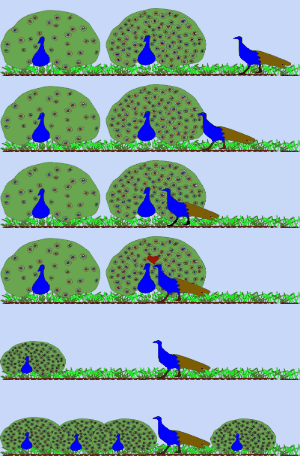
Figure 2.2 Sexual selection
The most controversial aspects of Darwin’s theory of natural selection relate to human evolution. The implication is that our physical structure, and therefore our behavioral potential, is the result of a natural process related to arbitrary environmental factors. Darwin did not at first relate natural selection to human evolution but eventually did so in his later publication, The Descent of Man (1871). It was not until a century later that a substantial number of fossils suggesting very gradual changes in human structure were discovered. This provided physical evidence for human evolution through natural selection.
You might be wondering if the human being is still evolving. In fact, there are several examples of relatively recent adaptive biological modifications apparently resulting from environmental changes. For example, tens of thousands of years ago, humans started moving to higher altitudes. DNA samples from cultures with a history of living in the mountains included genes impacting upon the amount of hemoglobin in the blood (NY Times, May 30, 2013). Individuals with these genes would be better able to cope with the low oxygen levels characteristic of high altitudes. For example, Tibetans tend to have broader arteries and capillaries than nearby Chinese populations living in low-lying areas. These broader vessels permit greater blood flow and a corresponding increase in delivery of oxygen to the cells of the body.
Heredity and Genetics
Darwin did not possess our current knowledge of the mechanisms involved in heredity, the transfer of characteristics from parent to child. He thought that half the characteristics of each parent were combined and transmitted to the next generation. This was a plausible hypothesis given the obvious similarities and differences between parents and offspring. However, if nothing else was involved, natural selection could not occur. Darwin had specified a process for selection but not for the potential variation in genes necessary for change to occur over time. The possibility of genetic mutation was yet to be discovered.
Although occurring at about the time that Darwin published The Origin of the Species (1859), Gregor Mendel’s genetic research with peas did not attain influence until early in the twentieth century. Mendel’s findings enabled Theodor Boveri (1904) to demonstrate the role of chromosomes (tiny threads contained within a cell’s nucleus) in heredity. Cells are the basic building blocks for plants and animals. The human body is comprised of trillions of cells. In 1910, Thomas Hunt Morgan, studying heredity in the fruit fly, demonstrated that genes were located on chromosomes in the cell nucleus. Genes are the basic units of heredity and ordinarily occupy constant positions on chromosomes. Genes are comprised of DNA (deoxyribonucleic acid), which includes all the information required for cell replication. Nearly every cell in the body has the same DNA. In 2003, the Human Genome Project reported that the entire human genome (i.e., all the genetic information characteristic of our species) consisted of approximately 20,000 genes. We now know that most genetic variation results from mutation, a permanent chemical change in the composition of a gene’s DNA. Mutations are rare, and ordinarily provide no adaptive advantage. Thus, it is not surprising that evolution through natural selection is very slow, taking millions of years in humans. First, an adaptive mutation must occur in a member of a species which must be fortunate enough to survive and successfully mate. Then, multiple generations would be required for this difference to show up in a significant number of other surviving individuals. It should be emphasized that the adaptive value of a mutation depends upon the environment in which it occurs (Figure 2.3). For example, one third of the indigenous inhabitants of Sub-Saharan Africa carry the gene for sickle cell disease. This gene increases immunity to malaria, making it adaptive in Africa while being maladaptive elsewhere.

Figure 2.3 Explanation of evolution
Genotypes and Phenotypes
The inherited instructions contained within an individual’s genes are referred to as its genotype. Your DNA includes all the information required to create an individual with your exact physical characteristics, susceptibility to specific diseases, and even some of your temperament. At fertilization, humans inherit 46 chromosomes, 23 apiece from our biological mothers and fathers. The 23rd male chromosome determines the sex of the child. This is because females carry two of the same sex chromosome (called X) whereas males carry one X and one Y (male) chromosome (see Figure 2.4). The chromosome pairs and DNA sequences are structurally similar. Traits are passed on from generation to generation through the DNA contained in genes on these chromosomes.

Figure 2.4 The Y-chromosome
Mendel discovered that when crossing plants with different characteristics (e.g., white or purple) the result was not a blend. Rather, one of the initial characteristics would occur (e.g., the next generation would be purple). Mendel referred to this as a dominant trait and to the other as a recessive trait. For example, in humans brown hair is dominant over red hair. This means that if a child inherits a brown gene from one parent and red gene from the other parent, her/his hair will be brown. However, since that child carries both gene colors, it is possible that offspring will inherit red hair. Traits can skip generations.
The observable physical and behavioral characteristics of a species are referred to as its phenotype. We saw in Chapter 1 that complex human behavior is the result of an interaction between hereditary and environmental variables. It is also true that environmental factors interact with genetic factors with regard to physical traits. For example, an individual’s height and weight can be influenced by nutrition, infection, and other variables.
https://www.youtube.com/watch?v=UB6Upeo-HDE
Human Evolution
It is estimated that the universe is 13.8 billion years old and that the earth is 4.54 billion years old (Dalrymple, 2001). The human being is the most complicated animal on earth. Physical evidence suggests life in the form of simple cells first appeared 3.6 billion years ago. Half a billion years ago, animal life emerged from the sea. Over time, closer approximations to a modern human being appeared. In terms of biology’s family tree, humans are considered primates, a branch including apes, monkeys, and lemurs for which we have discovered fossils dating back approximately 55 million years. The human being’s closest existing primate “relatives”, chimpanzees, bonobos, and gorillas, diverged approximately four to six million years ago. Fossilized evidence suggests the first bipedal animals (i.e., standing on two legs) appeared approximately seven million years ago with the earliest documented evidence for humans (i.e., members of the biological genus “Homo”) dating back approximately 2.3 million years. It is at this time that we observe the first indication of use of stone tools by Homo hablis. This and other transformational events are depicted in Figure 2.5. Note that the brains of early humans were comparable in size to those of chimpanzees and gorillas. This size more than doubled over the course of 2 million years until the appearance of Homo sapiens (modern humans) approximately 200,000 years ago.

Figure 2.5 Human timeline
None of the transformational discoveries listed in Figure 2.5 was inevitable. Evolutionary biologist Jared Diamond (2005) wrote a wonderful Pulitzer prize-winning book tracing the history of the human being leading up to and after the last ice age, approximately 13,000 years ago. He describes how features of the climate and environment impacted on the course of development of humans on the different continents and why some cultures eventually became dominant over others. For most of our time on earth, variations of the human species survived as nomadic small bands of hunter/gatherers in Africa. Diamond (2005, 36-37) describes fossilized evidence that humans migrated to Southeast Asia approximately 1 million years ago, with Homo sapiens reaching Europe ½-million years ago. Existing evidence suggests that modern humans reached the Americas between 14,000 and 35,000 years ago. Diamond (2005, 87) provides an overview of the causal factors impacting upon the human condition. Geographic and climatic conditions affecting the availability of wild plants and animals determined the possibility of development of agriculture and animal domestication. Localized food production enabled establishment of more permanent residences and larger communities. Food storage permitted surpluses, freeing people from survival demands on a day-to-day basis. This resulted in development of new “occupations” and technologies, dramatically altering the human condition.
My students readily admit that where they were born was an extremely important yet arbitrary event impacting upon the course of their life. If they were born and lived in the rain forest they would not be prepared to attend college. Alternately, if at their present age they were dropped in the rain forest without modern technologies or assistance from natives, they would probably not survive.
The terms “human evolution”, “ human condition”, and “human potential”, must be carefully analyzed to be most meaningful. Our potential as individuals and as a species starts with the physical structure (i.e., anatomy) that evolved through the process of natural selection. The Mostly Nature section of this book describes how our anatomy permits us to sense specific sources of physical stimulation originating from outside (Chapter 3) and within (Chapter 4) our bodies. The current chapter describes how the anatomy of our brain and nervous system enables us to process and coordinate this physical stimulation and transmit information to those parts of our body capable of responding. Our anatomy places limits on the types of physical information we are able to sense and the types of responses we are able to make. These limitations meant that we were not always capable of surviving and reproducing under all the geographic and climatic conditions that existed on earth. Our physical structure, however, included the potential to touch, manipulate, and change the planet. The development of tools and technologies magnified this capability, eventually resulting in transformative changes in our environmental conditions. We refer to the interface between our physical structure and environment as the human condition. Over the millennia, humans acquired the capability of surviving anywhere on this planet, traveling to the moon, and exploring the universe. The fascinating story of the past, present, and future potential of our species starts with an understanding of human genetic potential
Human Genetic Potential
When I was a child I faithfully watched the Superman TV show. I would play with my friends, pretending to be Superman, and try to leap off a step while wearing my cape (actually a towel). Despite doing my best to imitate my hero I never took off. I wasn’t a bird or Superman. Flying was beyond my genetic potential. We saw that the human brain significantly increased in size over the course of evolution. A convenient way of considering what constitutes the genetic potential for human behavior is to examine the human motor homunculus (little person). This is a representation of the amount of “brain space” in the cortex allotted to different parts of our body for acting upon our environment (see Figure 2.6). Consistent with the distinctive human DNA described in Figure 1.2, a disproportionate amount of the cortex is allocated to organs related to speech (lips, jaw, tongue, and voice box) and to the hands (particularly the thumb). The ability to manipulate our facial muscles, tongue, and larynx provides the potential to emit an enormous variety of vocalizations. Initial attempts to teach chimps to speak (Hayes and Hayes, 1952) were unsuccessful, primarily due to limitations in the use of these body parts. Our ability to manipulate our fingers and thumbs to form the precision grip enables us to grasp and hold objects of different sizes and shapes.

Figure 2.6 The motor homunculus
Millions of years of evolution resulted in an animal with the genetic potential to learn complex behaviors, speak and create tools. This potential took a very long time to emerge. However, once realized, the combination of imagination, communication, and manipulation resulted in humans dominating and changing our planet. Theodosius Dobzhansky (1960), a noted Russian genetic biologist, stated
“Mutation, sexual recombination and natural selection led to the emergence of Homo sapiens. The creatures that preceded him had already developed the rudiments of tool-using, tool making and cultural transmission. But the next evolutionary step was so great as to constitute a difference in kind from those before it. There now appeared an organism whose mastery of technology and of symbolic communication enabled it to create a supraorganic culture . Other organisms adapt to their environments by changing their genes in accordance with the demands of the surroundings. Man and man alone can also adapt by changing his environments to fit his genes. His genes enable him to invent new tools, to alter his opinions, his aims and his conduct, to acquire new knowledge and new wisdom.” The "supraorganic culture" Dobzhansky describes, results from the multiplicative effects of human's shared imaginings, communications and manipulations. Throughout this book we will seek to understand our potential to transform the world, the human condition and our individual selves. We start with the human genotype.
Attributions
Figure 2.1 "Darwin's finches" by Avrand6 is licensed under CC BY 4.0
Figure 2.2 "Sexual selection" by Sizzlinggreg is licensed under CC BY-SA 4.0
Figure 2.3 "Explanation of evolution" is licensed under CC BY-SA 3.0
Figure 2.4 "Y-chromosome" is licensed under CC BY-SA 4.0
Figure 2.5 "Human timeline" by Drbogdan is licensed under CC BY-SA 4.0
Figure 2.6 "Motor homonculus" by Albert Kok is in the Public Domain
an individual’s expectancy that they are able to perform a specific task
one's personal evaluation
the attempt to identify and create niches in which individuals are able to achieve their self-defined goals and realize their potential while serving the needs of a social group
a comprehensive treatment approach to conduct disorder incorporating evidence-based practices in the child’s home, school, and community
an increase in the frequency of a behavior as the result of a consequence
consequence in which removing (escape) or preventing (avoidance) an aversive stimulus results in an increase in the frequency of behavior
Pavlov's term for when words, through classical conditioning, acquired the capacity to influence behavior
the cumulative response pattern characteristic of the FI reinforcement schedule; there is an extended pause after reinforcement followed by a gradual increase in response rate until the reward becomes available again
randomly presenting a sample of items from a set in order to infer the total amount recalled
